Grades:
9th Grade, 10th Grade, 11th Grade, 12th Grade
This lesson is designed for Day 3. Students use outside resources to modify and test helmet effectiveness with Pocketlab sensors. In this hands-on lesson, students will create a prototype and run
Grades:
5th Grade
After watching a video of the space station, students will design and build a model space station containing certain requirements. Students will use scale in order to create a blue print and then
Grades:
7th Grade, 8th Grade, 9th Grade, 10th Grade, 11th Grade
This outstanding multi-day lesson covers the anatomical design of the respiratory system. Students will work on a basic model project to simulate breathing action and the diaphragm. They will also
Grades:
3rd Grade, 4th Grade, 5th Grade
In this lesson, students will research Native American homes within different environments and create a model of a Native American home. They will then create and deliver an oral presentation to
Grades:
Kindergarten, 1st Grade, 2nd Grade, 3rd Grade
This lesson plan is designed to give students the opportunity to learn about and implement bar graphs, line graphs, and picture graphs. Students will make physical graphs as well as digital graphs
Grades:
2nd Grade
This is a virtual 360° Tour of Coronado National Memorial Cave. Students can take the tour and follow along with the resources embedded in both the tour and the lesson. Students will locate the key
Grades:
1st Grade, 2nd Grade, 3rd Grade, 4th Grade, 5th Grade
In this hands-on lesson, students explore engineering and art as they use the same materials as the three little pigs to create a structure that would survive the blowing of a wolf (fan). Students
Grades:
9th Grade, 10th Grade, 11th Grade, 12th Grade
Get the athletic shoes ready! Students calculate their own physical power output by walking, and then hustling/running, up a flight of stairs in this engaging lesson. The change in potential energy
Grades:
7th Grade, 8th Grade
Students will learn how to bring their images to life by coding movement and will use math skills.
Grades:
9th Grade, 10th Grade, 11th Grade, 12th Grade
In this lesson, students physically manipulate a couple of springs and then collect data from a spring force Phet simulator. Next, they graph the data, calculate the area under the curve of their
Grades:
1st Grade
In this lesson, students will practice the skill of sequencing the main parts of The Very Hungry Caterpillar by Eric Carle. Students will then use the indi robot and coding tiles to create a model
Featured
A Very Hungry Robot: Lesson 2
Grades:
1st Grade
In this lesson, students will relate The Very Hungry Caterpillar to a butterfly's life cycle. Students will learn the four main parts of a butterfly's life cycle and then use the indi robot to create
Grades:
7th Grade, 8th Grade, 9th Grade, 10th Grade, 11th Grade, 12th Grade
This is an introduction to exoplanets and their discovery. In the hands-on activity, students make a lightcurve for an exoplanet transit using data from the DIY MicroObservatory Telescope Network.
Grades:
8th Grade
In this fun and engaging lesson, students will use the ASU Monster Maker Game for a fun project that assesses students on dominant and recessive alleles, genotype, phenotype, Punnett Squares, and
Grades:
6th Grade, 7th Grade, 8th Grade
Students will create an engineering notebook that documents their progress through the engineering design process as it applies to their choice of project, either creating a toy from “trash” or a
Grades:
9th Grade, 10th Grade, 11th Grade, 12th Grade
In this engaging lesson, students move the learning from within the classroom to outside its walls in order to study and record air quality readings (with no tech and tech applications). Students gain
Grades:
10th Grade, 11th Grade, 12th Grade
In this hands-on lesson, students study and record water quality readings by gaining an understanding of the significance of the readings along with the use of the correct vocabulary.
Grades:
4th Grade
The students will work in groups to create a model of a roof that is able to survive a hurricane-like wind. Students learn about disaster preparedness, use the engineering design process to guide the
Grades:
Kindergarten, 1st Grade, 2nd Grade, 3rd Grade, 4th Grade, 5th Grade
This hands-on lesson introduces students to gardening and the sustainability of food. Students will grow small gardens and manage them.
Grades:
9th Grade, 10th Grade, 11th Grade, 12th Grade
In this creative lesson, students choose to be heroes saving an endangered species or to be villains eradicating an endangered species. They create their origin story, finance a plan, and end with a
Grades:
5th Grade, 6th Grade
This hands-on lesson has students create a barometer using a jar, balloon, stir stick and tape. They collect data over a span of time and graph it to understand how a barometer works and how it
Grades:
7th Grade
In this lesson, students will carry out an investigation to discover how increasing the mass of an object will affect its motion. Then, they will design their own investigation to discover how
Grades:
8th Grade
In this hands-on lesson, students will carry out an investigation to gather evidence to determine whether a change is chemical or physical. This lesson concludes with a pixel art activity.
Featured Lesson Plans
Check out these notable lesson plans.

Grades:
6th Grade, 7th Grade, 8th Grade
For this lesson, students will be using the LEGO Spike Prime Kits and LEGO Mindstorm software. Students will write programs using the Color Sensor to make the Driving Base autonomous. A variety of
Featured
Eggcellent Car Race
Grades:
4th Grade, 5th Grade, 6th Grade, 7th Grade, 8th Grade
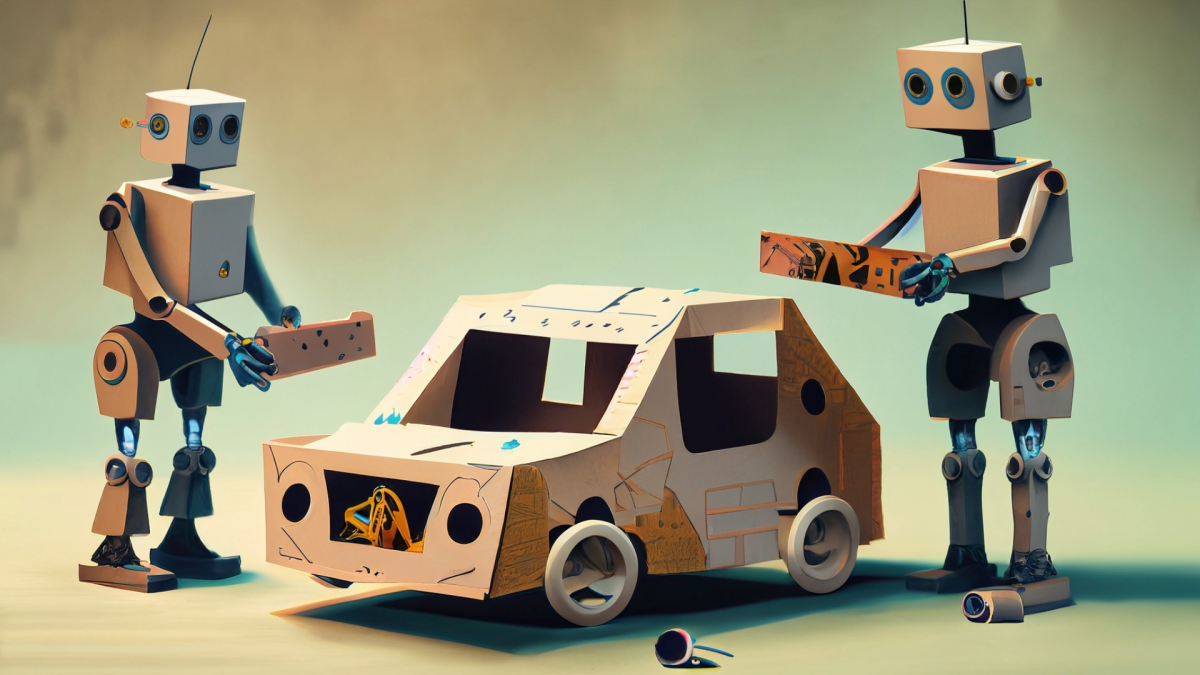
Students will design and build a car using STEM principles to safely transport a raw egg down a ramp, applying their knowledge of physics, engineering, and problem-solving.
Grades:
6th Grade, 7th Grade, 8th Grade
This is a 5E lesson plan for teaching middle school students (grades 6-8) how to use sensors to control motors and interact with objects on a field using block code with a system like LEGO Mindstorms.