Students will be extracting DNA from strawberries to help them understand DNA and its role in heredity and inheritance. Students will also practice math skills and compare data.
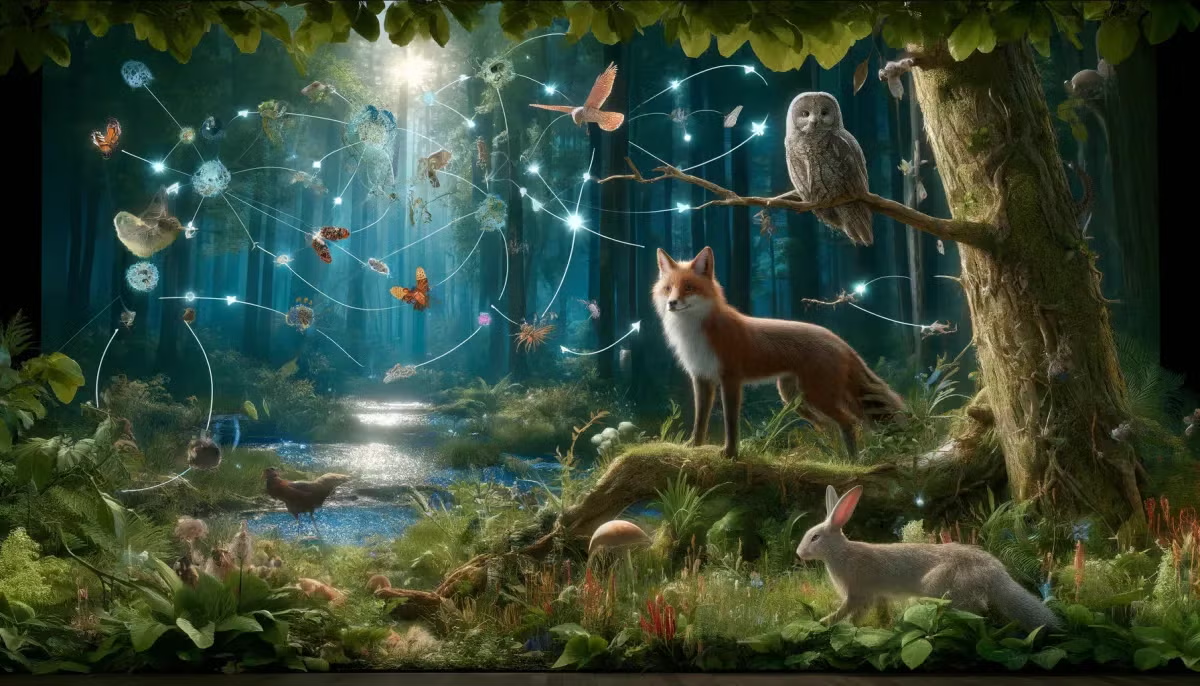
Students will develop and use models to explain how living things use resources to grow and survive; design and evaluate habitats for organisms using earth materials. Students will then experience how
This lesson is designed for K-2 students to explore and understand weather patterns using technology. Over the course of 45 minutes, students will use tablets or computers to gather real-time weather
Students will have the opportunity to explore the magnetic field in small groups or independently. Students will explore the forces by demonstrating how a paper clip can float in the air using a
Will integrating school gardening with bird watching, building nest baskets and a bird bath using ornithology methods increase the population of birds at our site? This lesson was developed by PBL
This lesson builds on student understanding of what how box plots summarize data sets and develops student knowledge of how to compare two sets of data using box plots and their five number summaries
This is the second part of a two-part lesson. This lesson has students using a stethoscope to measure heart rate to collect data for equivalent ratios.
The lesson looks at three driving questions: Is there an association between human height and wingspan? How can analyze a set of data to determine associations between these two variables? How can we
This STEM lesson focuses on science and math. It was written for 6th through 8th grade, but it can be adjusted to fit other grades. It was made for a whole group start, then move into groups of 3-4