In this lesson, students will first learn the importance of using reliable tools when gathering data in an experiment. When given common acidic and basic substances, students will then begin to
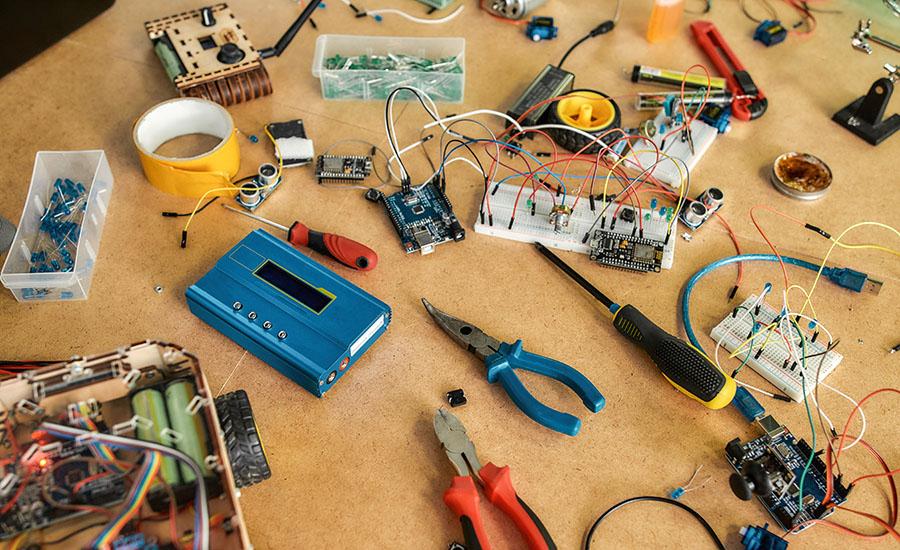
The students will create an interactive diorama using the Hummingbird Robotics kit on Natural Disasters. The students will choose their Natural Disaster that they want to bring to life, complete a
Students will be researching engineering design features that can be utilized to create buildings that can more effectively withstand the effects of a major earthquake. Students will work within a
Have you ever seen a weather forecast on TV? If so, you might have noticed the letters "H" and "L" moving around on the weather map. They are often referred to as zones of "high pressure" (H) and "low
Our planet recycles and reuses everything on it that is needed to support life. It is an amazing, giant recycling system called the biogeochemical cycle. You can actually model this on a small scale
This is a hands-on lesson for both science and math exploration. Students use tape to explore the forces between charges and come up with a mathematical expression for how that works! They create a
This lesson is focused on solidifying the definition of percent while students collaborate, implement a variety of tools to solve problems involving percentages. Mathematical practices are embedded
This 45-minute lesson is an introduction to living vs nonliving things for kindergarten students. Students have the opportunity to use technology to capture photos of living and nonliving things
Students will review and reinforce the rules of adding and subtracting integers through stories, games, and animations created with scratch.mit.edu. Student will explore what others have created and