
Grades:
9th Grade, 10th Grade, 11th Grade, 12th Grade
Multi-week cross-curricular project combining STEM, cultural studies, history, and ELA, culminating in cultural exchange, podcast style reflections, photo/video sharing/storytelling, and an experience
Grades:
9th Grade, 10th Grade, 11th Grade, 12th Grade
Students will use leaf disks punched out of spinach leaves and a syringe to demonstrate the production of oxygen to determine the rate of photosynthesis. Once an initial rate is determined, students
Grades:
9th Grade, 10th Grade, 11th Grade, 12th Grade
Where learning takes root and futures grow: This is the first lesson that was used for a project that took learning beyond the classroom and into the garden, where students gain hands-on skills
Grades:
9th Grade, 10th Grade
In this lesson, students will explore the cell membrane as the selective “gatekeeper” of the cell, regulating the movement of substances to maintain balance and homeostasis. Using both virtual reality
Grades:
9th Grade, 10th Grade
In this interactive simulation, students explore the concept of carrying capacity by modeling changes in a deer population over 20 years. Using dice rolls and ecological scenarios, students apply
Grades:
9th Grade, 10th Grade, 11th Grade, 12th Grade
This lesson introduces students to the logistic growth function as a model of population growth with limiting factors. Students will compare exponential and logistic growth, interpret key parameters
Grades:
9th Grade, 10th Grade, 11th Grade, 12th Grade
In this lesson, students explore how scientists identify bacteria by analyzing the 16S ribosomal RNA gene. Through hands-on activities and bioinformatics tools, students learn the process of
Grades:
9th Grade, 10th Grade
Students will be able to see the effects of cellular respiration (exhalation of carbon dioxide) in a state of rest as well as during a state of exercise and to correlate cellular respiration with
Grades:
9th Grade, 10th Grade
How do the components in your food help / hinder cellular respiration? The purpose of this lesson is to understand the contents of our favorite foods and then understand what foods contain vitamin C
Grades:
9th Grade, 10th Grade, 11th Grade, 12th Grade
Students will work in small groups to create a water filtration system to demonstrate understanding of water purification systems and human influences.

Grades:
9th Grade
This is a cash cow lab experiment, students are going to apply their experiment at the lab. it's a biotech labs that uses the fact that molecules of different sizes move at different speeds
Grades:
9th Grade, 10th Grade, 11th Grade, 12th Grade
In studying science, we are limited by the bounds of our own senses when collecting data. By developing technology that allows us to enhance and extend our senses, we can study things we would not
Grades:
9th Grade, 10th Grade, 11th Grade, 12th Grade
Students will use Gel Electrophoresis to diagnose the dominant, fatal, genetic disorder of Huntington's Disease, a neurodegenerative disorder caused by an excessive number of CAG repeats in the DNA
Grades:
9th Grade, 10th Grade, 11th Grade
This lesson is designed to uderstand the stages of mitosis by integrating Virtual Reality (VR) in the classroom. The students will be able to identify and describe the key events in each stage of
Grades:
9th Grade, 10th Grade, 11th Grade, 12th Grade
Students are guided through the urgency to create large scale plan solutions for climate mitigation and green energy fuel sources. They will then build and design a bioreactor using algae as a

Grades:
6th Grade, 7th Grade, 8th Grade, 9th Grade, 10th Grade, 11th Grade, 12th Grade
This lesson is designed to encourage students to explore their interests and pursue their passions while diving into the world of STEM. This lesson takes place in a classroom for one semester. 1 hour
Grades:
9th Grade, 10th Grade, 11th Grade
In this engaging lesson, students will delve into the fascinating world of phylogenetics, using the DNA sequences and genetic information of their selected organisms to construct an automated
Grades:
9th Grade, 10th Grade, 11th Grade, 12th Grade
Students will explore the historical use of natural pigments by indigenous peoples, particularly those native to the Southwest region. They will use mathematical concepts to paint using the pigments
Grades:
9th Grade, 10th Grade, 11th Grade, 12th Grade
"A Solution to Plastic Pollution" – an engaging and hands-on lesson plan designed to empower students to address one of the most pressing environmental challenges of our time: plastic pollution. In
Grades:
6th Grade, 7th Grade, 8th Grade, 9th Grade, 10th Grade, 11th Grade, 12th Grade
Students use a GIS story map and hands on investigation to analyze the urban heat island effect in Phoenix.
Grades:
9th Grade
This is a lesson plan for an activity that is used to teach meiosis. Students learn about various stages of meiosis and how it leads to variation.
Grades:
9th Grade, 10th Grade
This multi-day lesson requires students to collect data on cellular respiration and photosynthesis. This data-intensive exercise involves the use of CO2 sensors and biochambers. The experiments
Grades:
9th Grade, 10th Grade, 11th Grade, 12th Grade
This STEM Argumentative Research Project engages students in exploring the scientific, ethical, and societal implications of themes in Mary Shelley's "Frankenstein." Students will work in groups to
Grades:
7th Grade, 8th Grade, 9th Grade, 10th Grade, 11th Grade, 12th Grade
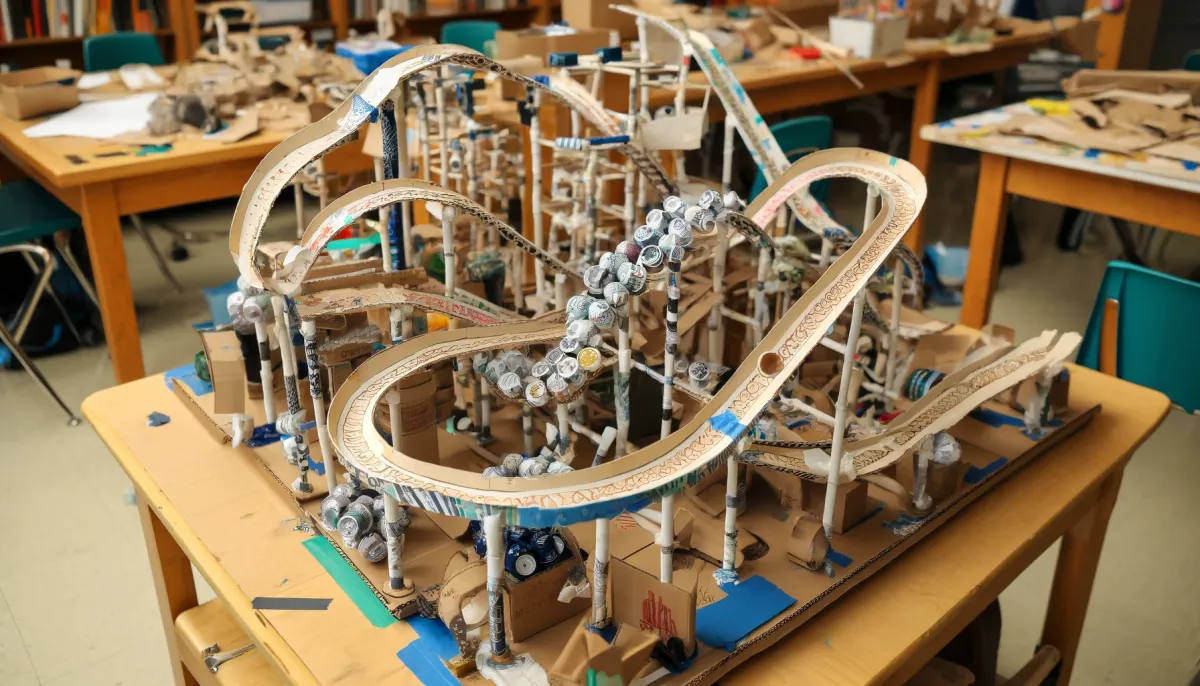
Students will apply principles of design, engineering, and mathematics to create a physical or digital labyrinth inspired by the myth of Theseus. This project integrates STEM concepts with literature