Grades:
8th Grade
Students will be extracting DNA from strawberries to help them understand DNA and its role in heredity and inheritance. Students will also practice math skills and compare data.

Grades:
6th Grade
In this 6th grade STEM lesson, students explore the real-world challenges of renewable energy by designing and testing simple solar oven and wind turbine models. Working collaboratively, they will
Grades:
6th Grade
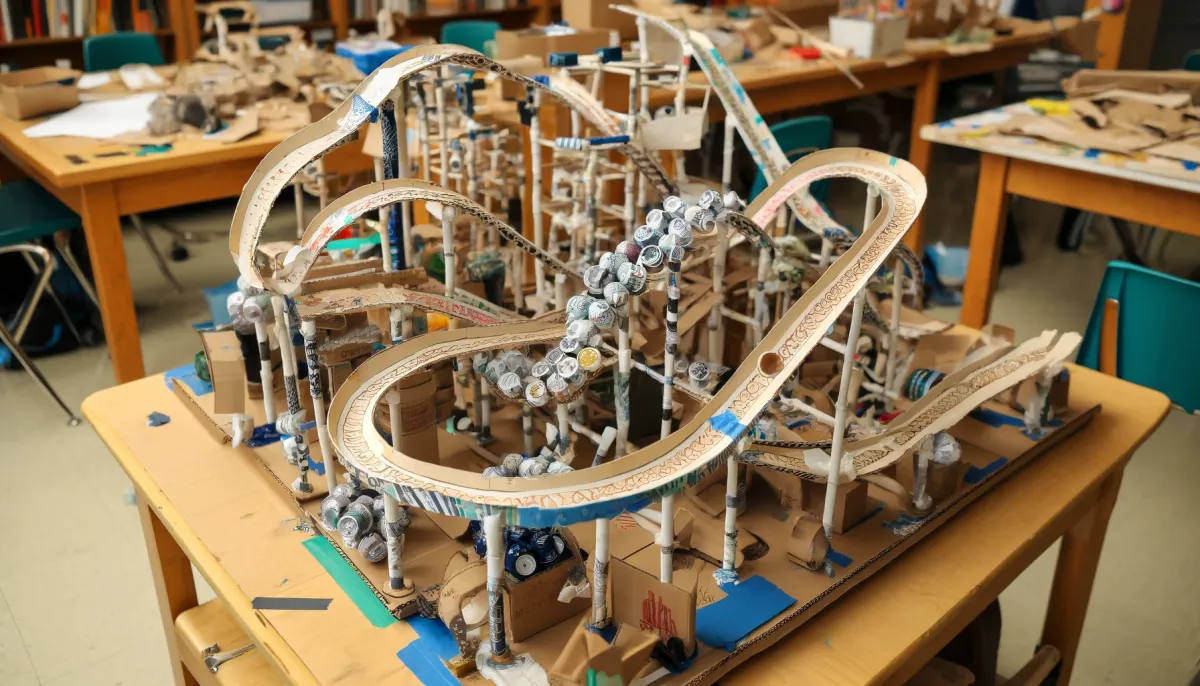
Students design and build eco-friendly theme park rides using recycled materials to model energy efficiency, test data, and explore sustainable power sources through STEAM.
Grades:
6th Grade, 7th Grade, 8th Grade
This is a 4-day unit on what forensic scientists do. Students will first conduct research on what a forensic scientist does and participate in extracting DNA. Then students will participate in a
Grades:
9th Grade, 10th Grade, 11th Grade, 12th Grade
This lesson introduces students to the logistic growth function as a model of population growth with limiting factors. Students will compare exponential and logistic growth, interpret key parameters
Grades:
9th Grade, 10th Grade, 11th Grade, 12th Grade
In this lesson, students explore how scientists identify bacteria by analyzing the 16S ribosomal RNA gene. Through hands-on activities and bioinformatics tools, students learn the process of

Grades:
4th Grade, 5th Grade
In this cross grade, multi-curricular three lesson mini-unit students will identify each part of a flower and its function as well as the necessities plants need to thrive. Students will observe the
Grades:
6th Grade, 7th Grade, 8th Grade
Explore genetic diversity and conservation with a hands-on activity simulating the bottleneck effect using black-footed ferrets as a case study. This lesson is Ideal for grades 6 and up.
Grades:
3rd Grade, 4th Grade
In this lesson, 3rd and 4th-grade students will explore the life cycles of various animals using technology to enhance their understanding. Students will research the stages of an animal's life cycle

Grades:
9th Grade, 10th Grade, 11th Grade, 12th Grade
This lesson builds on student understanding of what how box plots summarize data sets and develops student knowledge of how to compare two sets of data using box plots and their five number summaries
Grades:
8th Grade
Students will review heredity and genetics using this lesson plan. Students will have an opportunity to explore generations, genetic variations, pedigrees and fitness using this lesson plan and PhET
Grades:
9th Grade, 10th Grade, 11th Grade, 12th Grade
This lesson supports students in physically understanding how data values are summarized and represented with a box plot. Students will also use an online tool in order to create one.
Grades:
6th Grade, 7th Grade, 8th Grade
Students will be measuring the heights of two groups to compare the averages, minimums, maximums, and standard deviations of normal distributions by using the functions on Google Sheets.

Grades:
10th Grade, 11th Grade, 12th Grade
This lesson plan is on how to make agar plates to grow media on. This teaches the students how to measure out the agar and water and mix properly and plate the agar properly.
Grades:
8th Grade
The lesson looks at three driving questions: Is there an association between human height and wingspan? How can analyze a set of data to determine associations between these two variables? How can we

Grades:
Kindergarten, 1st Grade, 2nd Grade, 3rd Grade, 4th Grade, 5th Grade, 6th Grade, 7th Grade, 8th Grade
Most students are likely familiar with popular films like Happy Feet, Surf’s Up, Penguins of Madagascar, and classic books like Mr. Popper's Penguins. Capitalizing on this familiarity with penguins
Grades:
3rd Grade
Students compare the structures and functions of traits that enable organisms to survive in a specific environment. Analyzing the traits of animals provides evidence for how those traits vary, how
Grades:
5th Grade
Students observe the phenomena of a raisin (a.k.a. sewer slug) moving up and down in a carbonated beverage. By having students collect data and calculate averages, math is brought into this long-time
Grades:
9th Grade, 10th Grade, 11th Grade, 12th Grade
Students will use Gel Electrophoresis to diagnose the dominant, fatal, genetic disorder of Huntington's Disease, a neurodegenerative disorder caused by an excessive number of CAG repeats in the DNA
Grades:
6th Grade, 7th Grade, 8th Grade
This STEM lesson focuses on science and math. It was written for 6th through 8th grade, but it can be adjusted to fit other grades. It was made for a whole group start, then move into groups of 3-4
Grades:
8th Grade
Students will learn about DNA base pairs. As a team they will send a student to read a sequence of DNA/RNA and will have their group duplicate or sequence the complimentary base pair. Students will
Grades:
9th Grade, 10th Grade, 11th Grade
This lesson is designed to uderstand the stages of mitosis by integrating Virtual Reality (VR) in the classroom. The students will be able to identify and describe the key events in each stage of
Grades:
3rd Grade, 4th Grade, 5th Grade, 6th Grade
In this lesson plan, students explore the ideas of energy transfer between two objects. Students are tasked with making a maze for a marble to run through, using a 3d pen and other materials. Students
Grades:
4th Grade, 5th Grade
In this lesson, we will learn about different methods for growing potatoes, as the pioneer farmers would have needed to test during the time of the settlers in the United States and Westward Expansion