Wand Circuits
by Elizabeth Martinez-Szewczyk
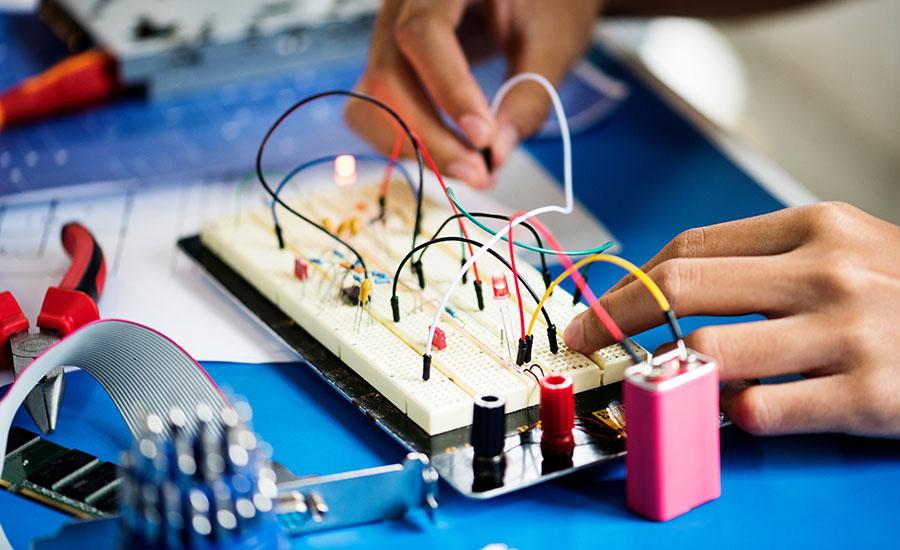
In this hands-on STEM lesson, students will learn about basic electrical circuits by designing and building their own light-up wands. Using craft sticks, copper tape, an LED light bulb, a CR2032 battery, and electrical tape, students will explore the principles of electricity and energy transfer.
This lesson follows the 5E instructional model—Engage, Explore, Explain, Elaborate, and Evaluate—to provide a structured learning experience. Students will engage in problem-solving, creative design, and experimentation, ultimately demonstrating their understanding of electrical circuits through a functional and personalized light-up wand.
Lesson Plan Link/URL
https://docs.google.com/presentation/d/1lR4cbQkk4JJRLoNyayiY-PRzvCYWoavl/edit?u…Subject Area
Science Physical Science P4: Energy Transfer Technology 4. Innovative Designer 5. Computational Thinker Engineering S4: Apply Science to Engineering
Featured
Off
Related Content
Grades:
6th Grade, 7th Grade, 8th Grade
Model Building For Disaster is a 4-6 week unit in which students research natural disasters around the world and their effect on developing countries. Following their research, student teams design

Grades:
4th Grade, 5th Grade, 6th Grade, 7th Grade, 8th Grade
In this hands-on lesson, students learn how to get their drone into the air. It covers hovering, yaw, roll, and pitch. Before the students launch their drones, there is a discussion about preparing
Grades:
4th Grade, 5th Grade, 6th Grade, 7th Grade, 8th Grade
This is the first lesson in a series of 4. Students gain an understanding of the forces that are acting upon a drone when it is flying. They will learn about how thrust, weight, lift and drag work