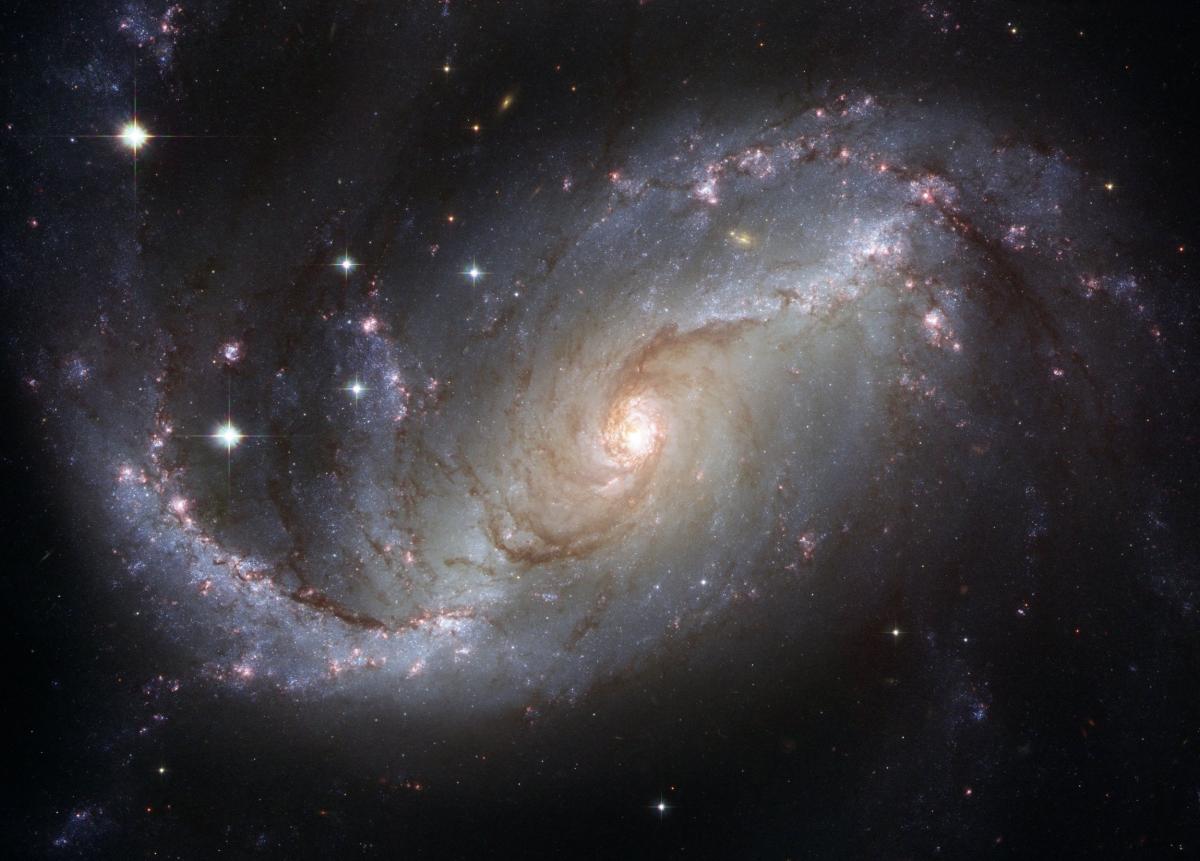
This engaging lesson is an introductory lesson regarding the size and scale of the Universe and objects within. This was designed for high school Astronomy but is easily useable with ages down through

In this engaging lesson, students determine the period of rotation for the flying pig toy using formulas derived throughout the circular motion unit.
This two-part lesson models STEM instruction in the context of an ELD classroom. In part 1 (this lesson), the goal is to promote scientific academic discourse in an ELD classroom. Students use a
In this physics lesson, students carry out a lab activity to determine Hooke's Law and investigate spring constants.
By 2028, NASA plans to send a mission to Mars to retrieve samples collected by rovers and return to Earth. Student teams are challenged to build a rover and design a way to retrieve as much cargo as
Students will design paper gliders to develop an understanding of the principles of flight. This is a low-tech lesson that does not require extensive/expensive supplies. It can be scaled up or down
2nd grade students will work collaboratively to describe, illustrate, and communicate their understanding of the states of matter involving liquids, solids, and gases. The lesson includes extension
This is the 2nd lesson in a series of 2. Day 2 - The students are challenged to conduct design-controlled experiments to identify the substances responsible for the observed chemical and physical
This is the 1st lesson in a series of 2. Day 1 - The purpose of this inquiry-based demonstration is to have students make observations about the changes that occur when several substances are mixed