In this lesson, students use the Kepler’s Laws PhET Simulation to collect data on the period and average radius of the planetary orbits. They graph and analyze that data to derive Kepler’s 3rd Law.
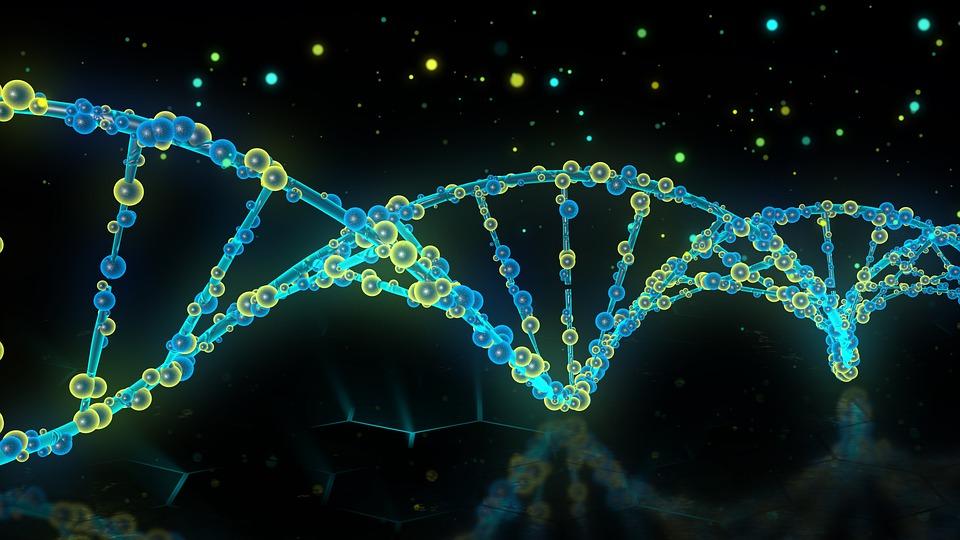

In this lesson, students will be introduced to mutations in DNA. They will create beaded or illustrated "codes" to represent 5 different mutations to their original protein codes. These codes will be
In this lesson students will continue to learn about protein synthesis. At the beginning of this lesson students should know that genes have the code to make proteins. Today they will be introduced to
In this lesson students are introduced to the idea that DNA is the code to create proteins and that proteins can be structural or functional. Students are given a problem to create a model of a
This lesson is PART 4 of a four-lesson unit, which focuses on futures thinking, the phenomenon of electricity, closed-system agriculture, and water as a renewable energy resource. “The City of Ember”
This lesson is PART 3 of a four-lesson unit, which focuses on futures thinking, the phenomenon of electricity, closed-system agriculture, and water as a renewable energy resource. “The City of Ember”
This lesson is PART 2 of a four-lesson unit, which focuses on futures thinking, the phenomenon of electricity, closed-system agriculture, and water as a renewable energy resource. “The City of Ember”
This lesson is PART 1 of a four-lesson unit, which focuses on futures thinking, the phenomenon of electricity, closed-system agriculture, and water as a renewable energy resource. “The City of Ember”
Students have the opportunity explore different materials that use nanotechnology and then discuss the key differences between macroscale and nanoscale impacts on those materials.