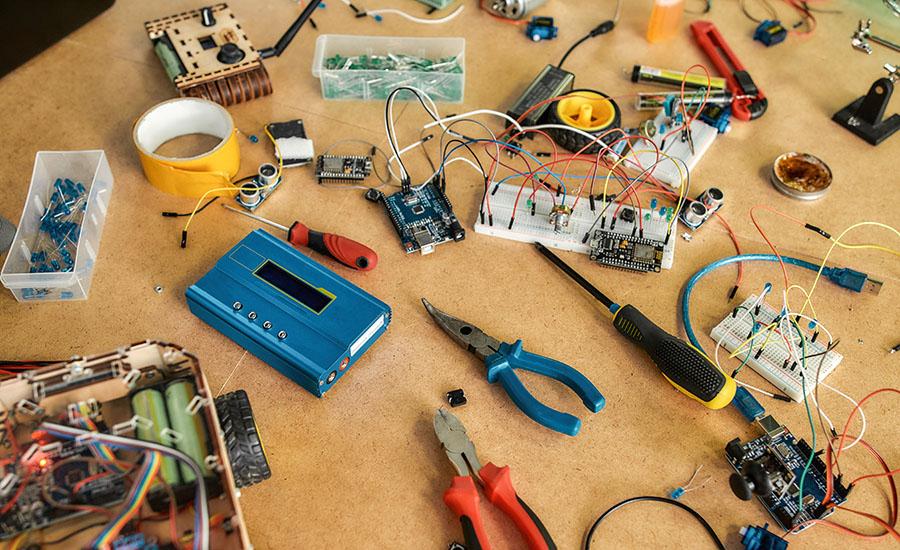
This lesson will help students learn how to code on micro:bits and create on this mini coding board. Students do not need the physical micro:bit to complete this lesson. On the website, there is a
Students will learn about kinetic and potential energy and how energy transfers. They will use that knowledge in order to collaborate with peers to create a roller coaster that will demonstrate this
This lesson is a follow up of lesson 1 of 2. Students will extend the focus of their cause by creating a logo and swag to be presented at an "EXPO" held at your school.
This lesson can be applied to multiple content areas. Following a discussion about what a cause is and looking at examples, students will work in groups to create a name, mission statement, and vision
Students are introduced to the javelina through reading part of The Three Little Javelinas, reading about javelinas and watching an informational video. They discover potential conflicts and root
Students read The 3 Little Javelinas and experiment with making adobe bricks dwellings. Students analyze temperature data and describe benefits and drawbacks to using adobe.
In this lesson, students will continue to build on their knowledge of electric circuits by testing materials for conductivity. Students will use Makey Makeys and random supplies to generate a
Students will be able to identify, understand and describe acute, obtuse, right, scalene, isosceles and equilateral triangles and use this knowledge to perform at the Sphero Rodeo! This lesson
This lesson is for 2nd-5th grade students. It covers a range of AZ science standards and connects to math, reading, and social studies concepts. It also incorporates STEAM hands on activities to